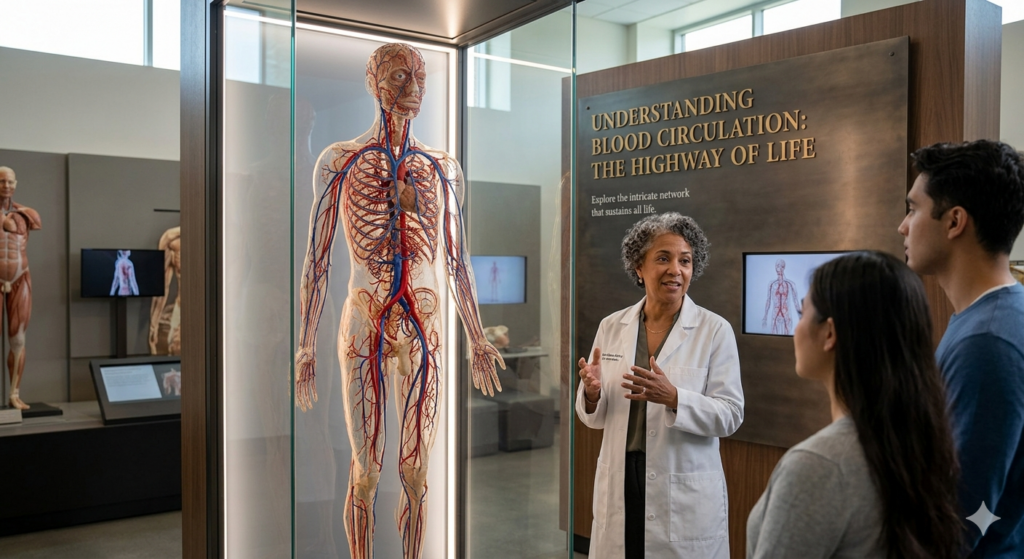
Understanding blood circulation is one of the most fundamental aspects of human biology, and one of the most vital. Just as highways connect cities and keep economies moving, blood circulation connects every organ, tissue, and cell in your body, delivering the oxygen and nutrients that keep you alive. Without this intricate network, life as we know it simply could not exist.
What Is Blood Circulation?
Blood circulation refers to the continuous movement of blood through the heart and blood vessels throughout the body. This process is driven by the heart, a powerful muscular pump that beats approximately 100,000 times per day. Understanding blood circulation means recognizing that this system never rests — from the moment you are born until your last breath, it works without pause.
The circulatory system is made up of three key components: the heart, blood vessels, and blood itself. Together, they form a closed-loop highway that transports oxygen, nutrients, hormones, and immune cells to every corner of the body while simultaneously removing carbon dioxide and metabolic waste products.
The Two Circuits: Pulmonary and Systemic
Blood circulation operates through two distinct but interconnected loops.
1. Pulmonary Circulation
This loop carries deoxygenated blood from the right side of the heart to the lungs, where it picks up oxygen and releases carbon dioxide. The oxygen-rich blood then returns to the left side of the heart, ready to be pumped throughout the body. Think of this as the “refueling station” on the highway of life.
2. Systemic Circulation
This is the larger circuit. The left ventricle pumps oxygen-rich blood out through the aorta — the body’s largest artery — and into a vast network of smaller arteries, arterioles, and capillaries. At the capillary level, nutrients and oxygen are exchanged with cells, and waste products are collected. The now-deoxygenated blood returns to the heart via veins, completing the cycle.
Understanding blood circulation in this dual-circuit context explains why the heart has four chambers: two atria and two ventricles, each playing a precise role in keeping both loops running efficiently.
The Role of Blood Vessels
Your body contains approximately 60,000 miles of blood vessels. These vessels are categorized into three types:
- Arteries — carry oxygen-rich blood away from the heart under high pressure.
- Veins — return deoxygenated blood to the heart; equipped with valves to prevent backflow.
- Capillaries — microscopic vessels where the actual exchange of gases, nutrients, and waste occurs at the cellular level.
The health of these vessels directly determines the efficiency of blood circulation. When arteries become stiff or narrowed due to plaque buildup (atherosclerosis), the flow is restricted — much like a traffic jam on a major highway.
Why Blood Circulation Matters for Your Health
Proper blood circulation is essential for virtually every function in the human body. Here is why it matters:
Oxygen delivery: Every cell needs oxygen to produce energy. Poor circulation leads to fatigue, brain fog, and organ dysfunction.
- Immune defense: White blood cells travel through the bloodstream to fight infections and heal injuries.
- Temperature regulation: Blood circulation helps distribute heat evenly across the body, maintaining a stable core temperature.
- Hormonal communication: Hormones produced by glands are transported via the bloodstream to target organs.
- Waste removal: The circulatory system partners with the kidneys and lungs to expel toxins and carbon dioxide.
Understanding blood circulation also sheds light on why conditions like hypertension, diabetes, and obesity are so dangerous — they directly damage blood vessels and impair the entire system.
Common Circulatory Disorders
Several conditions can disrupt healthy blood circulation:
- Hypertension (High Blood Pressure): Forces the heart to work harder, weakening vessel walls over time.
- Peripheral Artery Disease (PAD): Narrowed arteries reduce blood flow to the limbs, causing pain and numbness.
- Deep Vein Thrombosis (DVT): Blood clots form in deep veins, posing a risk of pulmonary embolism.
- Coronary Artery Disease: Reduced blood flow to the heart muscle can trigger heart attacks.
Early detection and lifestyle modifications — including regular exercise, a balanced diet, and avoiding smoking — can significantly reduce the risk of these conditions.
How to Support Healthy Blood Circulation
Supporting your body’s natural blood circulation does not have to be complicated:
- Exercise regularly — Even a 30-minute daily walk stimulates blood flow and strengthens the heart.
- Stay hydrated — Blood is roughly 90% water; dehydration thickens it and slows circulation.
- Eat a heart-healthy diet — Omega-3 fatty acids, leafy greens, and antioxidants protect vessel integrity.
- Manage stress — Chronic stress raises cortisol levels, elevating blood pressure and constricting vessels.
- Avoid prolonged sitting — Get up and move every hour to prevent blood from pooling in the legs.
Conclusion
Understanding blood circulation is not just a matter of academic interest — it is knowledge that can save your life. This remarkable highway carries the very essence of life to every cell in your body, every second of every day. By appreciating how it works and taking deliberate steps to protect it, you invest in your long-term health, vitality, and longevity. The highway of life is always open; your job is to keep it clear.