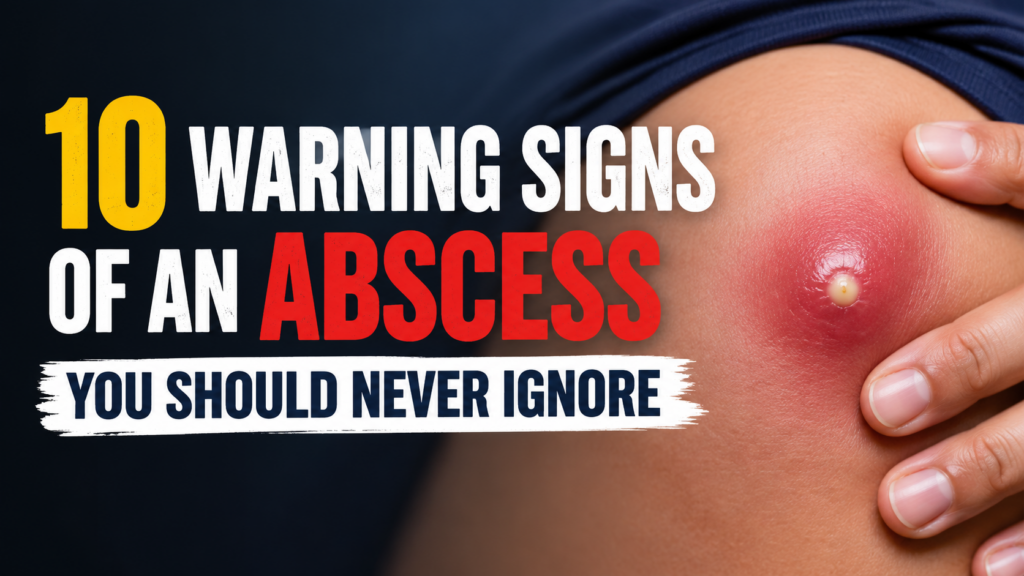
An abscess is a painful pocket of pus that forms when your body fights off a bacterial infection. While abscesses can develop almost anywhere — in your skin, gums, organs, or deep inside body tissues — they all share one thing in common: they demand prompt attention. Ignoring the warning signs of an abscess can lead to life-threatening complications, including the spread of infection to surrounding tissues or the bloodstream. Understanding the early signs of an abscess could literally save your life.
Here are 10 warning signs of an abscess you should never ignore.
1. A Swollen, Tender Lump Under the Skin
One of the earliest and most recognizable warning signs of this ailment is a raised, swollen lump beneath the skin. This bump is typically warm to the touch and extremely tender when pressed. It forms as white blood cells rush to the site of infection, creating a pus-filled cavity. Never attempt to squeeze or pop this lump — doing so can drive the infection deeper.
2. Throbbing or Pulsating Pain
Unlike ordinary soreness, the pain associated with an abscess is often described as throbbing, deep, and relentless. The pressure from accumulated pus causes a pulsating sensation that may worsen when lying down or at rest. If you notice this type of persistent, rhythmic pain in any part of your body, it could be a sign of an abscess forming beneath the surface.
3. Redness and Skin Discoloration
The skin around an abscess typically becomes red, inflamed, and visibly discolored. This is your immune system sending extra blood to the affected area to fight infection. The redness may spread outward from the center of the lump — a symptom known as cellulitis — indicating the infection is spreading into surrounding tissue. Spreading redness is a medical emergency.
4. Fever and Chills
When the infection associated with this ailment begins affecting your entire body, fever and chills often follow. A temperature above 101°F (38.3°C), accompanied by shivering, sweating, or feeling generally unwell, signals that your immune system is in overdrive. This is one of the most serious warning signs of an abscess and should prompt immediate medical evaluation.
5. Visible Pus or Discharge
A clear sign that an abscess has ruptured or is close to doing so is the presence of yellow, green, or blood-tinged pus draining from the affected area. While drainage can actually relieve pain temporarily, it does not mean the infection is gone. Bacteria remain active in the surrounding tissue, and a doctor must properly clean and treat the wound to prevent recurrence.
6. Swollen Lymph Nodes
Your lymph nodes act as filters for harmful substances in the body. When an abscess develops nearby, the lymph nodes in that region — under your arms, in your groin, or along your neck — may swell and become tender. Swollen lymph nodes are your body’s signal that it is actively battling infection, and this symptom should never be dismissed.
7. Difficulty Eating, Swallowing, or Speaking
A dental abscess — one that forms in or around a tooth — can cause swelling that spreads to the jaw, cheek, or throat. This may make it difficult to eat, swallow, or even speak clearly. In severe cases, swelling can narrow the airway and become a medical emergency requiring urgent care. Dental abscesses are among the most commonly overlooked types.
8. Foul Taste or Bad Breath
Persistent bad breath or a foul, bitter taste in the mouth that doesn’t resolve with brushing can indicate a dental or throat abscess. Pus from an abscess often seeps into the mouth, creating an unpleasant taste and odor. If oral hygiene measures fail to resolve the issue, see a dentist or physician promptly.
9. Fatigue and General Weakness
Ongoing fatigue, weakness, or a general feeling of being unwell — without an obvious cause like poor sleep — may indicate your body is silently fighting an internal abscess. Deep-seated abscesses in organs such as the liver, lungs, or appendix often present with few outward signs but cause profound tiredness as the immune system battles the underlying infection.
10. A Hard, Non-Healing Wound or Sore
A wound, cut, or sore that refuses to heal, hardens over time, or keeps refilling with fluid could be concealing an abscess underneath. This is particularly common after surgery, injections, or skin injuries. Any wound that shows no signs of healing within a week or two warrants a medical review.
When to See a Doctor
If you notice any combination of the warning signs of an abscess described above — especially fever, spreading redness, swollen lymph nodes, or difficulty swallowing — seek medical attention without delay. Abscesses rarely resolve on their own and almost always require professional drainage, antibiotics, or both.
Early diagnosis and treatment of an abscess dramatically reduces the risk of serious complications such as sepsis, a life-threatening whole-body infection. Never wait and hope these symptoms disappear on their own.
Final Thoughts
Recognizing the warning signs of an abscess early is the most important step you can take to protect your health. Whether the abscess is on your skin, in a tooth, or deep within an organ, the body’s signals are consistent: pain, swelling, heat, redness, and systemic symptoms like fever. Listen to your body, trust these warning signs, and consult a healthcare provider at the first sign of trouble. An abscess caught early is an abscess treated effectively.
Always consult a licensed medical professional for diagnosis and treatment. This article is for informational purposes only.